

News
News




As global environmental regulations tighten and the demand for recovered carbon black and industrial fuel oil surges, investing in a waste tire pyrolysis project has become a highly lucrative venture. However, project developers and investors frequently ask: "How much does a tire pyrolysis plant actually cost, and what is the real Return on Investment (ROI)?"
This comprehensive guide breaks down the Capital Expenditure (CapEx), Operational Expenditure (OpEx), revenue models, and payback periods based on real-world engineering data from DOING ECO installations across 100+ countries.
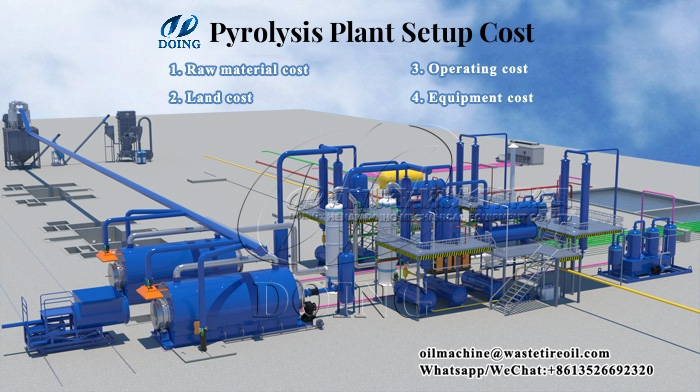 Cost of setting up a waste tire pyrolysis plant
The total initial investment for a tire pyrolysis plant depends primarily on the plant scale, reactor technology (Batch vs. Fully Continuous), and local environmental compliance requirements.
CapEx Distribution Matrix by Plant Capacity
| Plant Scale & Model | Daily Capacity | Machinery & Equipment Cost (USD) | Environmental Scrubbing Grade |
| Frame-mounted Mini Plant | 100kg-1Tons/Day | $1,000 – $35,000 | Standard Scrubber |
| Batch Pyrolysis Plant | 5-20 Tons/Day | $40,000 – $120,000 | Custom Multi-stage Scrubbing |
| Continuous Plant | 15-50Tons/Day | $350,000 – $530,000 | High-Grade Heavy Scrubbing |
Note on Core Machinery Costs:
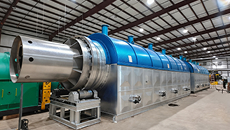
Pyrolysis Equipment designed and manufactured by DOING ECO includes high-temperature resistant pyrolysis reactor vessels, heavy-duty condensing systems, safety alarming devices, and automated syn-gas recycling burners.
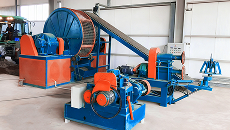
Other Auxiliary Equipment in Pyrolysis Process: auto-feeder, tyre shredder, plastic crusher, steel wire drawing machine
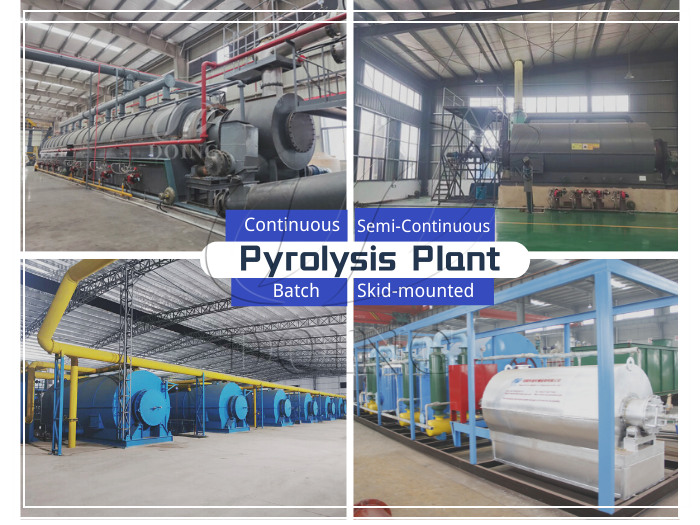 Waste tire pyrolysis plant categorized by processing capacity
Operating costs per ton of waste tires processed vary based on local labor rates, electricity tariffs, and raw material availability.
Estimated OpEx Per Ton of Tires Processed (Standard 10 TPD Batch System)
1. Raw Material (Scrap Tires): $0 – $300 / Ton (In many regions, gate fees/tipping fees cover raw material costs).
2. Electricity Consumption: $15 – $30 / Ton.
3. Heating Fuel (Initial Start-up): Coal (~$50/ton), natural gas (~$52.5/ton), fuel oil (~$196/ton), or diesel (~$222/ton), depending on local availability. Syngas can be recycled after start-up to reduce fuel consumption.
4. Labor Cost: The number of operators required varies depending on the specific pyrolysis equipment and project details. Higher levels of automation in the pyrolysis equipment require fewer operators.
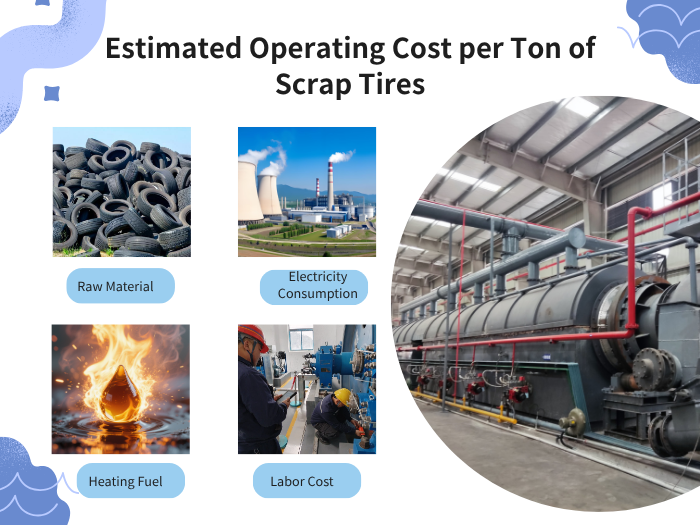 Factors affecting the cost of building a tire pyrolysis plant
A tire pyrolysis plant yields four primary commercial products. Below is the typical output yield achieved using DOING ECO's advanced thermal cracking technology:
●1 Ton Scrap Tires ──► 40% - 45% Tire Pyrolysis Oil (TPO)
●1 Ton Scrap Tires ──► 30% - 35% Recovered Carbon Black (rCB)
●1 Ton Scrap Tires ──► 12% - 15% Scrap Steel Wire
Typical Product Market Values & Financial Yields
| Pyrolysis Output | Average Yield (%) | Output per 10 Tons Feedstock | Estimated Market Price (USD/Ton) | Daily Gross Revenue |
| Tire Pyrolysis Oil (TPO) | 40% | 4.0 Tons | $500/Ton | $2000 |
| Carbon Black | 30% | 3.0 Tons | $60 – $185/Ton | $180-$555 |
| Steel Wire | 15% | 1.5 Tons | $215 /Ton | $322.5 |
| Total Daily Gross Revenue | — | — | — | $2,502.5–$2,877.5/day |
In some markets, such as India, tire recyclers may also earn additional income through EPR certificates and other waste management incentives. Waste treatment fees or recycling incentives may also be available in some regions, depending on local regulations and project conditions.
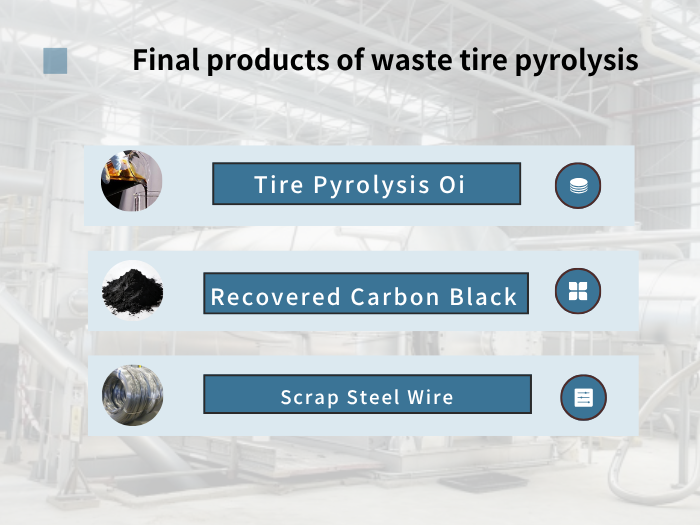 Final economic products of the waste tire pyrolysis project
Project Parameters:
· Plant Model: DOING ECO DY-10TPD Batch Pyrolysis System
· CapEx Investment: Approximately $250,000 (Equipment + Installation + Land Prep)
· Operating Days: 300 Days / Year
· Annual Processing Volume: 3,000 Tons of Scrap Tires
Financial Projection:
· Estimated Annual Gross Revenue: Approximately $750,000–$860,000
· Estimated Annual Operating Cost: Varies based on feedstock, energy, labor, and local operating conditions.
· Estimated Annual Net Profit: Depends on local product prices and operating costs.
· Estimated Payback Period: Approximately 1–2 Years
Note: Actual project returns vary significantly by local scrap tire costs, product selling prices, energy costs, labor, operating days, and plant configuration. The figures above are for reference only and should be evaluated based on specific project conditions.
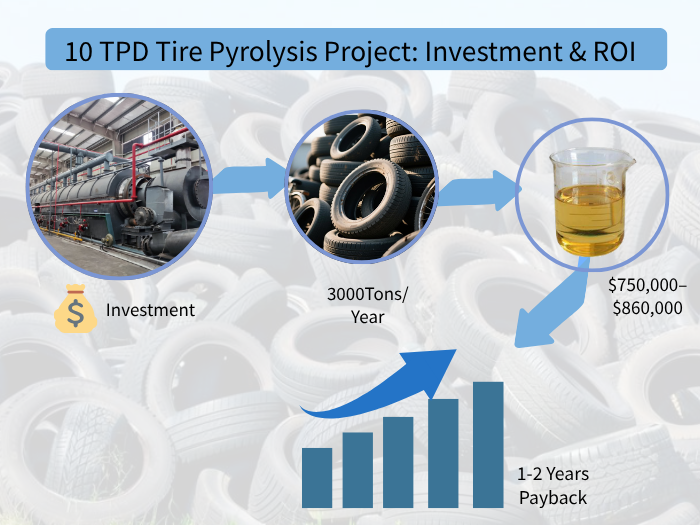 10 TPD scrap tire pyrolysis plant ROI and payback period infographic
When evaluating tire pyrolysis equipment suppliers, equipment reliability and emissions compliance determine long-term profitability. DOING ECO provides key technology safeguards:
Zero Pollution Emissions: Equipped with patented desulfurization, dedusting, and atomization scrubbing towers that meet stringent European Union and US EPA air quality standards.
High Oil Yield Design: Indirect heating reactors paired with multi-stage horizontal shell-and-tube condensers maximize oil recovery rates up to 45%.
Turnkey Engineering Support: Full lifecycle support from plant layout design, civil engineering guidance, and installation to operational training.
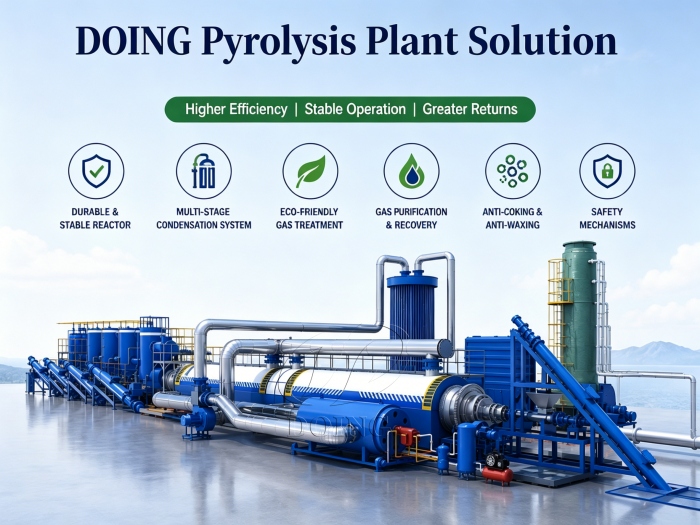 Advantages of Doing ECO waste tire pyrolysis equipment
Q1: What is the average lifespan of a DOING ECO pyrolysis reactor?
A: DOING ECO pyrolysis reactors are manufactured using high-grade boiler plate steel (Q345R /Stainless Steel) with a typical service lifespan of 10+ years under proper maintenance.
Q2: Can tire pyrolysis oil be refined into diesel?
A: Yes. Tire pyrolysis oil can be further processed using a DOING ECO Waste Oil Distillation Plant (DY-Distillation Series) to produce clean, light-yellow diesel fuel suitable for generators, tractors, and heavy machinery.
DOING ECO (formerly known as Henan Doing Company) is a world-leading manufacturer specializing in waste tire, plastic, and rubber pyrolysis machinery, as well as waste oil distillation systems. With over 15 years of manufacturing excellence, DOING ECO equipment has been exported to and installed in more than 100 countries worldwide.
Need a customized mass balance calculation, site layout plan, or region-specific ROI model for your project? Contact the DOING ECO engineering team today


Contact DOING experts and learn how we can service your needs.