

News
News




Tire shredding is needed when whole tires are too large for the reactor or feeding system, or when the pyrolysis plant requires pre-processed rubber feedstock.
For batch tire pyrolysis, whole tires may be fed directly if the reactor inlet and loading system can accommodate them. For Doing ECO(formerly Henan Doing)' s semi-continuous and fully continuous tire pyrolysis systems, waste tires must be processed into rubber particles or powder before feeding.
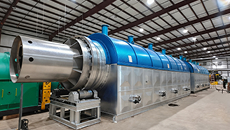
 Fully continuous pyrolysis equipment for rubber powder
Tire shredding may also be necessary when a project requires consistent feedstock quality, pre-separation of steel wire, or compliance with local regulations.
Regulatory requirements. Depending on your project location and target market, local regulations may mandate tire pretreatment before pyrolysis. India’s Technical Review Committee documents address waste-tire imports and recycling including tire shredding and pretreatment requirements. France’s End-of-Waste framework and the EU Landfill Directive create standards for projects targeting chemical feedstock or circular economy certification. The US EPA’s NHSM rule covers tire-derived fuel from shredded ELT. In Southeast Asia, the Middle East, and Africa, import permits, waste management licenses, and emissions standards vary by country. Verify the applicable requirements for your specific jurisdiction before finalizing equipment selection.
Product quality consistency. Whole tires vary in size, shape, thickness, and steel-wire content. This variation translates into temperature fluctuations and quality inconsistency inside the reactor — pyrolysis oil with variable composition, carbon black with unpredictable particle size. Shredding and granulation produces uniform rubber particles, which keeps the reactor operating within its designed thermal window and produces output that meets consistent specification. For projects selling recovered products to buyers with specific quality requirements, this is a commercial advantage.
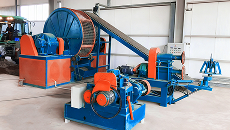
 Waste tyre rubber powder processing machine
Steel wire removal. Steel wire can be separated during tire shredding and granulation using magnetic separation equipment. Including wire removal as part of the pretreatment line protects the reactor from wire-related damage and produces cleaner recovered steel for resale. The configuration depends on the tire type, required feed size, and selected pyrolysis system.
For most continuous tire pyrolysis systems, 5–20 mm is the recommended target range:
Particles reach pyrolysis temperature uniformly within standard residence times
Flows cleanly through screw conveyors without bridging or packing
Magnetic separation achieves ≥99% steel removal at this size
Finer grinding costs more power per tonne with diminishing returns
One step that cannot be skipped regardless of particle size: magnetic separation after shredding. Wire remaining in the feedstock damages the feeder, contaminates carbon black, and creates hazardous sparks inside the reactor.
 Continuous rubber powder pyrolysis equipment
Doing ECO designs the waste pre-treatment systems as part of the pyrolysis plant configuration — not as a separate add-on. For batch systems where whole tires fit the reactor and loading system, a shredding line is optional. For semi-continuous and fully continuous systems, pre-processing into rubber particles is built into the standard configuration.
The shredding line, magnetic separator, and reactor are matched to the same throughput, particle size target, and compliance specification. This means the pretreatment stage is validated against the reactor’s actual requirements before the system is delivered — not assembled on site and hoped to work.
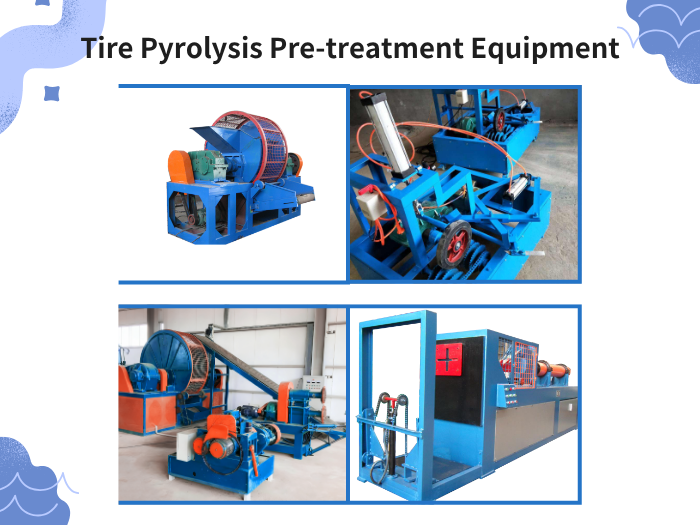 Tire shredding and pre-treatment equipment provided by Doing
DOING's technical team will leverage decades of experience to provide the most suitable and cost-effective tire shredding and pyrolysis solutions for each client's specific needs. Below are some of our successful case studies for reference:
1.DOING 15 TPD semi-continuous tire pyrolysis equipment installed in Indonesia
Tire pretreatment production line configuration: tire sidewall cutter, tire shredding machine, tire crusher to remove steel wire and cut tires into small particles(10-20mm)
2.DY-C-50TPD Model continuous pyrolysis plant installed in China
Tire pretreatment production line configuration: complete tyre rubber powder processing line to to process tires into rubber powder (below 2-5mm)
1.Can whole tires be fed directly into a pyrolysis plant?
Some batch pyrolysis systems can accept whole tires if the reactor inlet and loading system are suitable. For Doing ECO’s semi-continuous and fully continuous systems, tires must be pre-processed before feeding — this is a standard part of the system configuration.
2.What size should waste tires be processed to?
For most continuous systems, 5–20 mm is the recommended range. Batch systems that accept whole tires may skip shredding or use 20–50 mm shredded material. Confirm the specific size for your plant based on your reactor model and feeding system.
3.Does tire shredding improve product quality?
Shredding does not automatically increase pyrolysis oil yield. Its main benefit is consistent feedstock, which stabilizes reactor operation and reduces quality variation between output batches — valuable when pyrolysis oil or recovered carbon black is sold to buyers with specific quality requirements.
4.What is the complete process when shredding is required?
Waste tires → Shredding → Granulation → Magnetic steel-wire separation → Rubber particles/powder → Continuous or batch feed → Pyrolysis reactor → Gas condensation → Pyrolysis oil + recovered carbon black + recovered steel wire + non-condensable gas. For batch systems that accept whole tires: Waste tires → Loading → Pyrolysis → Condensation → Pyrolysis products.
Tire shredding is not required for every tire pyrolysis project. Batch systems may process whole tires; Doing ECO’s semi-continuous and fully continuous systems require pre-processed rubber particles or powder before feeding.
 Different types of waste tire pyrolysis machine
The right configuration depends on plant type, tire size, feeding system, required feed size, steel-wire handling, and local project requirements.
Send Doing ECO your tire type and processing capacity. We can recommend the appropriate pretreatment and pyrolysis system.


Contact DOING experts and learn how we can service your needs.