

News
News






Continuous pyrolysis systems are regarded as the future direction of tire recycling, mainly due to their significant advantages in terms of efficiency, environmental protection, safety, and economy. Compared with traditional batch processes or old pyrolysis methods, they represent a qualitative leap.
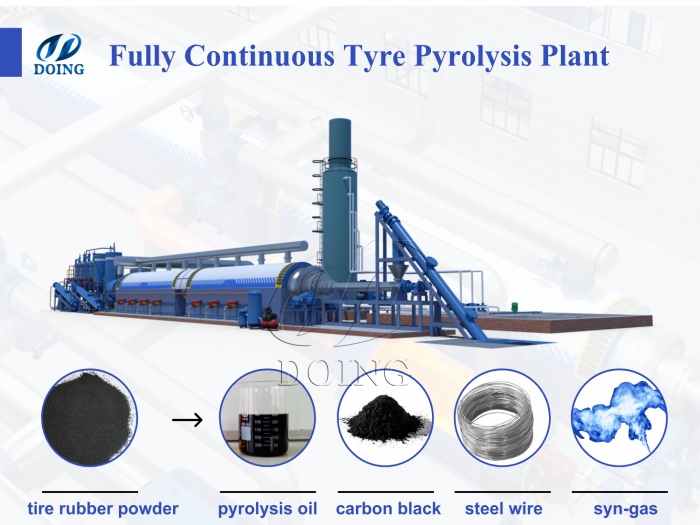
DOING continuous tire pyrolysis system
Here’s why continuous pyrolysis systems are widely recognized as the core of the industry's future development:
One of the most compelling advantages of continuous pyrolysis systems is their ability to deliver significantly higher processing capacities and operational efficiency. Unlike batch or semi-continuous pyrolysis systems that require frequent shutdowns for material loading, cooling, and unloading, continuous pyrolysis systems operate uninterrupted for about 45 days.
Automated, Uninterrupted Operation: From raw material input to product output, the entire process is automated and seamless. This eliminates the costly and time-consuming cycles of stopping, cooling, and restarting inherent in traditional pyrolysis processes.
Substantially Increased Throughput: Continuous pyrolysis systems operate without interruption, automating the entire process from tire feeding to byproduct discharge. Tires are fed steadily into a reactor, where they undergo pyrolysis at controlled temperatures, and products are extracted in real-time. This results in significantly higher capacities—single continuous pyrolysis units can handle 15-50 tons per day—making them suitable for large-scale tire recycling operations. For instance, a big capacity industrial scale continuous pyrolysis system can process over 18,000 tons annually, far exceeding traditional pyrolysis setups and meeting the growing demand for industrialized waste tire management. By eliminating manual interventions and reducing energy waste from restarts, these boost overall productivity, positioning continuous pyrolysis systems as essential for scaling tire recycling to meet global needs.
Traditional pyrolysis systems, reliant on manual loading and basic controls, are prone to risks like inconsistent pressure management and incomplete emission controls, leading to odors, air pollution, and regulatory fines. Continuous pyrolysis represents a significant upgrade in safety and environmental responsibility.
Enclosed System and Intelligent Control: Continuous pyrolysis system features a fully enclosed design coupled with advanced PLC systems for precise temperature and pressure monitoring, they maintain stable conditions to prevent accidents.
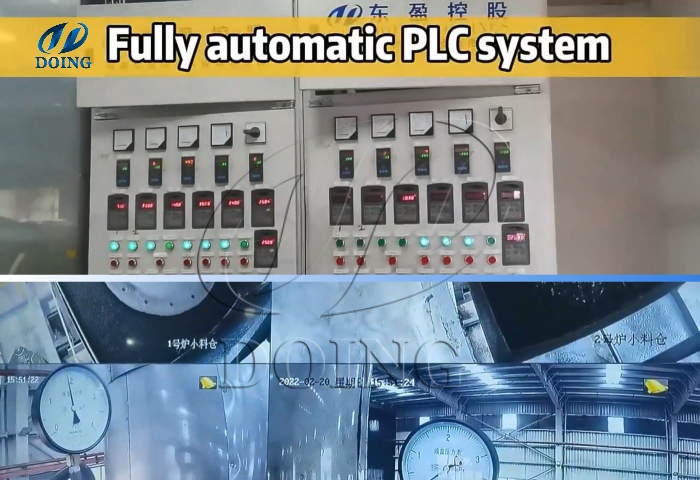
DOING continuous pyrolysis system PLC system
Compliance and Clean Operation: Continuous pyrolysis systems are equipped with comprehensive environmental protection devices, including advanced waste gas treatment systems and desulfurization towers. This ensures that all emissions, including waste gas and solid residues, meet stringent national and international discharge standards. The result is a clean production site free from odors and pollution. As a glod pyrolysis machine manufacturer, Henan DOING Company have installed environmentally compliant pyrolysis projects in many countries, such as the United States, Russia, the United Kingdom, Italy, France, China, Japan, and South Korea, which have strict environmental protection requirements, and even some tourist destinations such as Thailand and Fiji.
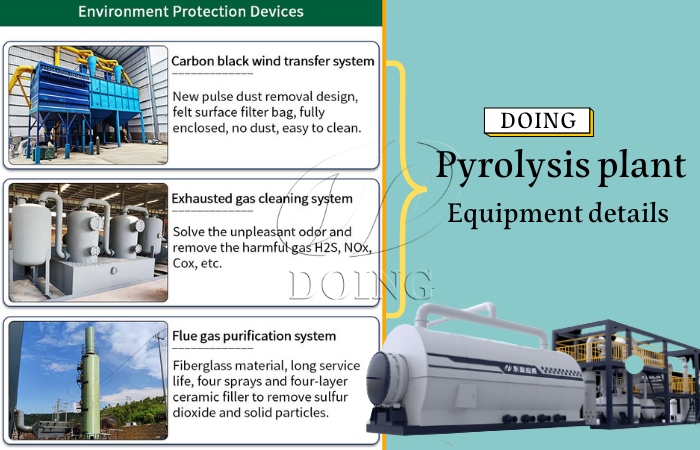
DOING continuous pyrolysis system environment protection devices
In traditional pyrolysis processes, uneven heating and variable residence times often result in lower yields and inconsistent product quality— for example, the oil yield from pyrolysis is unstable. Continuous pyrolysis technology excels at maximizing the value extracted from waste tires, achieving exceptionally high resource utilization rates.
Efficient Conversion of Materials: The stable and optimized reaction conditions in continuous systems lead to a more thorough conversion of waste tires into valuable products. It is estimated that processing 50 ton of waste tires can yield approximately 17.5 tons of recycled carbon black, 22.5 tons of fuel oil, 6 tons of steel wire, and combustible gases.
High-Value End Products: The recovered carbon black, fuel oil, and steel wire are all valuable industrial raw materials. This enables the creation of a "waste tire to new raw material" closed-loop system, significantly reducing reliance on virgin resources and promoting a circular economy.
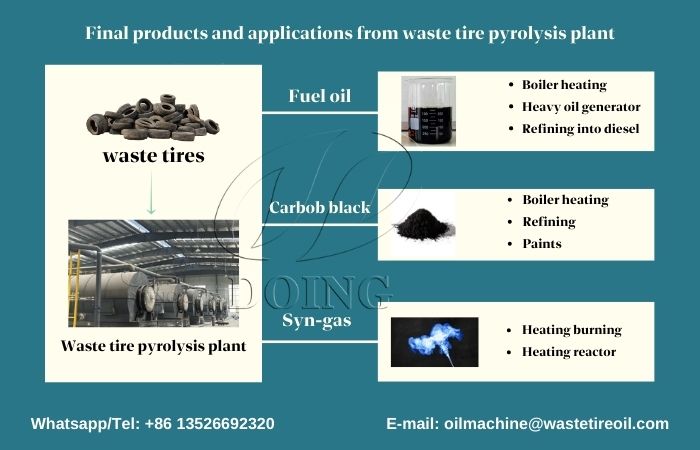
Applications of tire pyrolysis products
Consistent Product Quality: The controlled and consistent environment of continuous pyrolysis ensures the stable quality and properties of the recovered materials, making them readily accepted by downstream industries.
While the initial investment in a continuous pyrolysis system may be higher than that for basic batch pyrolysis system, the long-term economic benefits and operational sustainability are far superior.
Lower Operating Costs: High levels of automation translate to reduced labor costs. Furthermore, optimized energy consumption and stable operational performance contribute to significantly lower overall operating expenses over the continuous pyrolysis system's lifespan.
Risk Mitigation and Sustainability: By adhering to strict environmental regulations and achieving compliant emissions, continuous pyrolysis plants avoid the significant risk of operational shutdowns due to pollution violations. This regulatory compliance is a cornerstone of long-term business sustainability. More importantly, compared to tire accumulation and burning, which pose potential environmental pollution and fire hazards, continuous pyrolysis systems are more in line with the environmentally friendly and harmless tire recycling policies of various governments.
Profitability: The high recovery rate of valuable materials, coupled with lower operating costs, ensures a robust profit margin, making continuous pyrolysis a sound economic investment.
In summary, continuous pyrolysis systems are poised to shape the future of tire recycling due to their unmatched efficiency, enhanced safety and environmental performance, superior resource recovery, and solid economic returns.
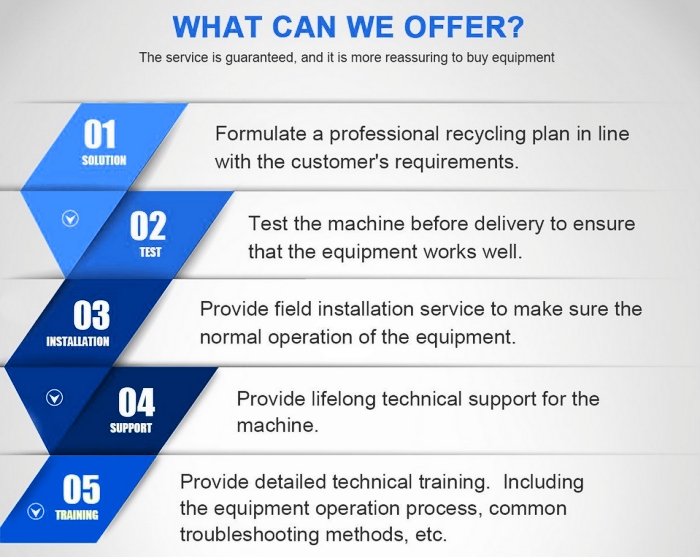
DOING continuous pyrolysis system manufacturer
As a mature manufacturer of continuous pyrolysis equipment, DOING Company is dedicated to providing reliable solutions to clients worldwide. We empower client to achieve efficient, environmentally responsible, and profitable tire pyrolysis recycling operations.


Contact DOING experts and learn how we can service your needs.