

News
News




Pyrolysis is a thermal decomposition process widely used in waste treatment, biomass utilization, and resource recycling. A common question is whether excess off-gas from pyrolysis process is released directly into the air. The short answer is no—direct discharge is neither safe nor compliant under modern environmental and industrial standards. In modern pyrolysis plants, off-gas is not released untreated. Instead, it is purified, recycled as fuel, or safely treated before any emission.
There are two types of gas in the pyrolysis process, one is syngas, and the other one is flue gas. During pyrolysis, organic waste like waste rubber, end-of-life tires or plastics are heated in an oxygen-free environment, producing fuel oil, carbon black, and combustible gas. The condensable part becomes pyrolysis oil, while the remaining non-condensable gas (syngas or off-gas) can be reused as heating energy after proper treatment. The flue gas generated during the reactor heating and pyrolysis processes will be purified and then discharged in compliance with standards.
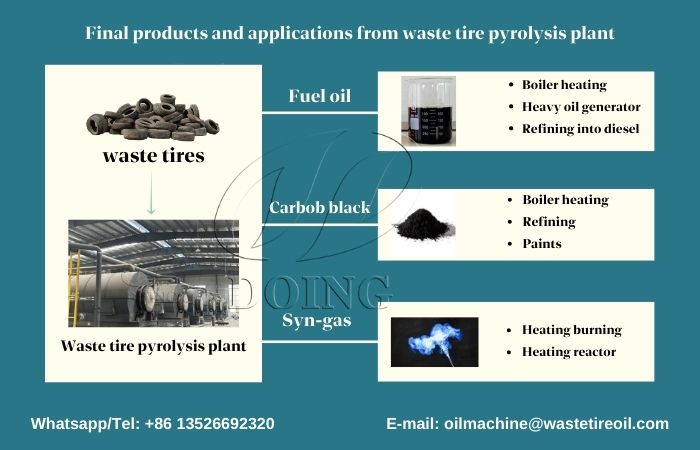 Products obtained from the pyrolysis of waste
How DOING Pyrolysis Systems Handles Excess Off-Gas
Henan DOING waste tire and plastic pyrolysis plants use a multi-stage gas treatment system designed for stable operation, gas purification, and energy recycling.
①Oil Gas Condensation
Hot oil gas first enters the condensation system, where most of the condensable oil is recovered as pyrolysis fuel oil. The remaining pyrolytic syngas then moves to the purification stage.
②Syngas Purification
Syngas is kind of heating fuel like natural gas. Syngas is a heating fuel similar to natural gas. DOING pyrolysis equipment features a patented odor treatment system that removes irritating and malodorous pollutants, such as hydrogen sulfide, sulfur dioxide, sulfur trioxide, and nitrogen dioxide from the syngas prior to its recovery and combustion; the purified syngas is odorless and suitable for use as a heating fuel.
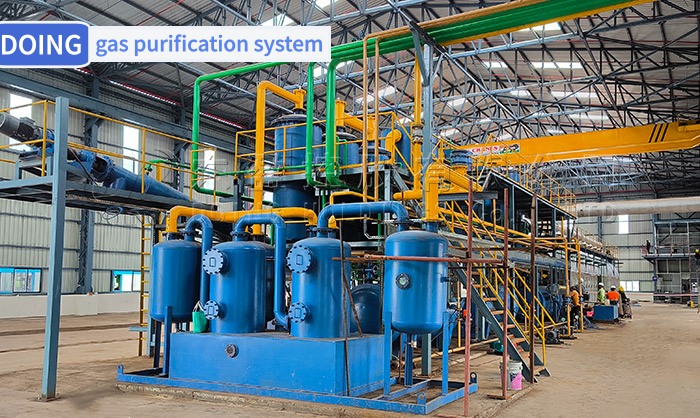 Eco-friendly tail gas purification unit for pyrolysis equipment
After purification, the syngas is further purified and recycled back to the burner system to heat the reactor.
Once the plant reaches stable operation, the recycled syngas can significantly reduce external fuel consumption and improve energy efficiency.
If excess syngas is generated, it is safely managed through a controlled combustion and treatment system rather than being released directly into the atmosphere.
Meanwhile, combustion flue gas passes through purification systems such as dust removal and adsorption treatment before final emission.
Depending on local environmental requirements, the system can be configured to help customers meet emission standards.
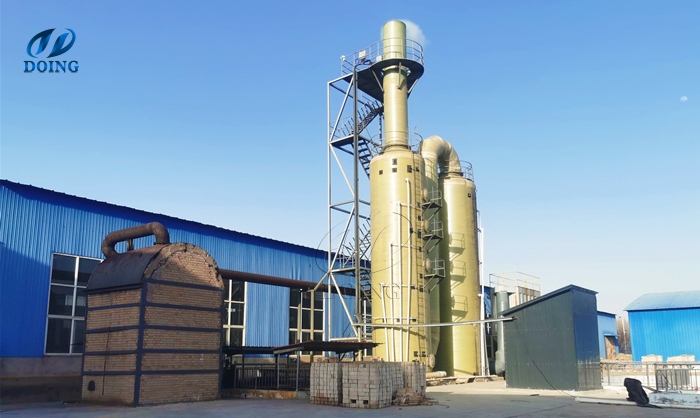 Pollution-free flue gas treatment tower for desulfurization and denitrification
1.Effective Odor Control
Hydrogen sulfide and sulfur-containing gases are effectively removed, greatly reducing unpleasant smells during operation.
2.Equipment Protection
The purification process helps reduce corrosion, extending the service life of
burners, pipelines, and reactors.
3.Energy Self-Sufficiency
Recycled syngas can be reused as heating fuel, reducing or even eliminating the need for external fuel after startup.
4.Easier Environmental Compliance
Henan DOING offers advanced waste gas treatment systems, including denitrification towers,desulfurization towers, electrostatic precipitators, and photo-oxidation/activated carbon units. These systems effectively reduce SOx, NOx, VOCs, and dust, ensuring emissions meet strict EU and U.S. EIA environmental standards and helping customers avoid fines and reputational risks. DOING Company has successfully customized and installed multiple pyrolysis projects worldwide that meet environmental impact assessment standards. We can also provide official testing
reports—issued by environmental testing agencies—covering excess off-gas and waste gas treatment for these pyrolysis projects for your reference.
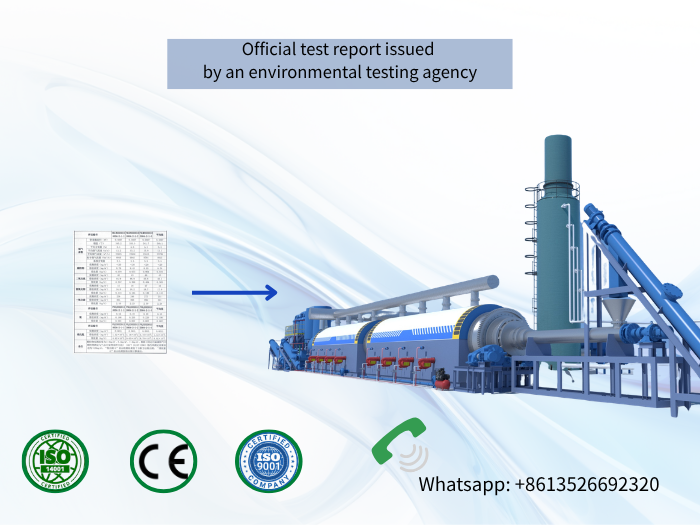 Eco-friendly pyrolysis equipment with official test reports
At Henan DOING, pyrolysis off-gas is treated as a reusable energy resource rather than waste. Through condensation, purification, recycling technologies and desulfurization, etc. DOING pyrolysis plants help customers improve energy efficiency while reducing environmental impact.
We can provide customized off-gas treatment solutions based on different materials, plant capacities, and local environmental requirements.


Contact DOING experts and learn how we can service your needs.