

News
News




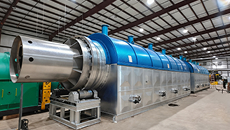
A DY-12 batch waste tire pyrolysis machine left DOING ECO's factory for Ethiopia in September 2026, shipped complete by sea.
| Item | Details |
|---|---|
| Client | India-based timber and fuel trading company |
| Project site | Ethiopia |
| Machine | DY-12 batch waste tire pyrolysis machine with tire cutting machine and carbon black briquette machine |
| Shipped | September 2026, by sea |
| Status | Shipped |
The client's main business is timber and fuel trading, with operations already running in Ethiopia. Tire recycling is the client's step into a second market, and the batch design matches that position: the DY-12 pyrolysis machine works in discrete cycles, so a first project can start at a measured pace and grow run by run on the same line.
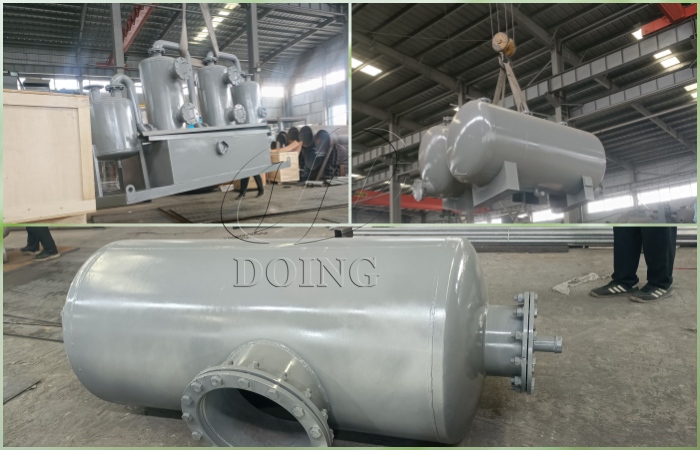
DY-12 batch waste tire pyrolysis machine shipment site
Each cycle covers feeding, heating, pyrolysis and discharge, with a pause between runs for inspection and maintenance. That rhythm gives a new operating team room to learn the line one run at a time, and it lets production follow the tyre supply instead of forcing a steady daily intake. The operation platform included in the shipment gives the crew one fixed working stand for feeding and burner control, which keeps the first runs manageable.
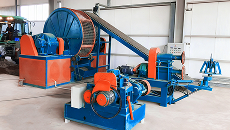
Work starts before the reactor. The tire circle cutting machine opens whole tires up, and the steel wire separator draws the steel out of the cut rubber, so the reactor receives wire-free feed. Each cycle then takes a fresh charge of prepared rubber: the DY-12 heats it in an oxygen-free state and breaks it down into oil vapour, carbon black and gas, at a daily rate of 12 tons of tires.
The vapour condenses in the tube-type condenser into pyrolysis oil. Carbon black leaves through the rear slag discharge after the run, runs through the water-cooled packing screw into bags, and the carbon black briquette machine presses it into solid briquettes for storage and sale.
Four 300,000 kcal heavy oil burners raise the reactor to pyrolysis temperature at each start-up. Once the run is going, the non-condensable gas it produces is treated by the exhaust gas purification device and burned in the furnace, covering much of the fuel the DY-12 batch waste tire pyrolysis machine needs. The flue gas from the burners passes the water-film dust collector in the cooling system and then the fiberglass-reinforced plastic (FRP) desulfurization tower before it leaves the site.
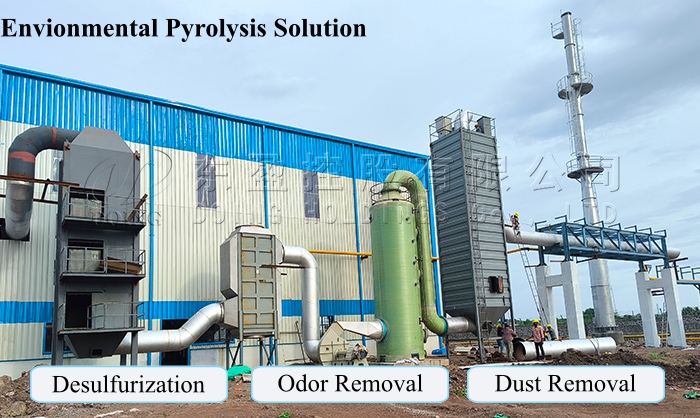
Pyrolysis machine emmission control devices
The order covered the build as well as the delivery. Reactor plates were rolled from boiler-grade steel and joined by submerged arc welding, welded parts were pressure-tested, and every part was tagged against the installation drawing before packing. Dispatch closed with a check of the packing list against the containers.
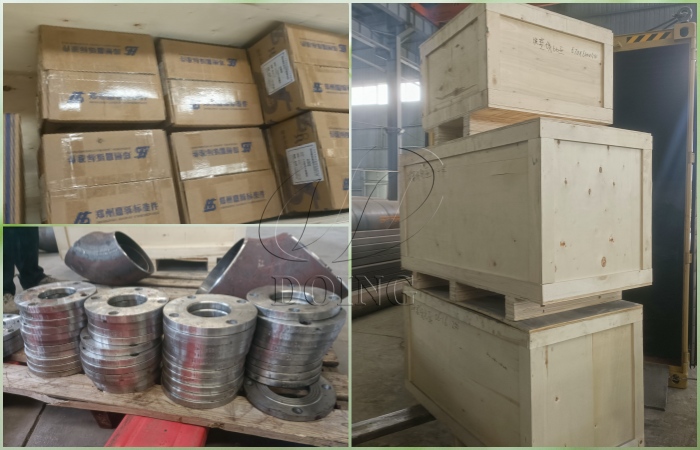
DY-12 batch waste tire pyrolysis machine packaging site
Installation has not started; the site work begins once the client's yard is ready. DOING ECO's engineers will guide positioning and pipework, commission the DY-12 batch waste tire pyrolysis machine and train the client's operators on site, and the client's decision to order leaned on that service reaching Ethiopia as reliably as the crates do.
The DY-12 batch waste tire pyrolysis machine can be charged with whole tyres through its door. The tyre cutting machine is included because cut feed heats more evenly and leaves the carbon black cleaner.
A continuous line runs around the clock on sealed feeding of shredded rubber powder; the DY-12 runs batch by batch on cut tyres, which makes start-up, inspection and staffing simpler for a first project.
Rubber and plastic product manufacturers, who use it as a filler raw material. Denser briquettes travel and store better than loose powder, which widens the client's selling range.


Contact DOING experts and learn how we can service your needs.