
FAQ
FAQ




When investing in pyrolysis equipment, a "one-size-fits-all" solution rarely proves effective. Raw material types vary widely, local emission standards differ, and production objectives are unique to each project. For this very reason, as a trusted manufacturer of pyrolysis machines, the DOING Group offers an extensive range of customization options for our batch, semi-automatic, and fully continuous pyrolysis systems.
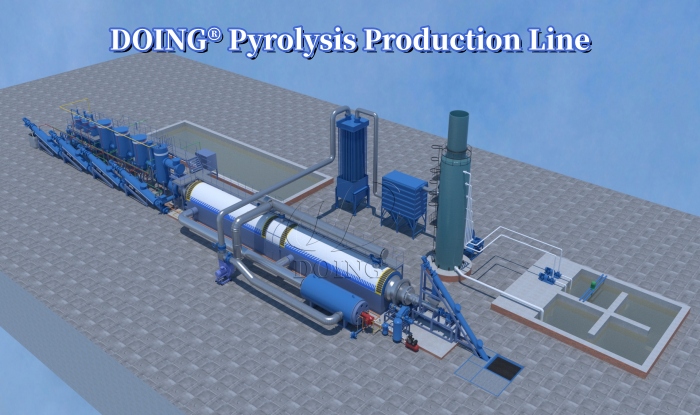 DOING pyrolysis production line design 3D picture
DOING Group is dedicated to providing customizable pyrolysis solutions designed to perfectly align with your specific project requirements, ensuring optimal efficiency and profitability for your pyrolysis plant.
Here's a detailed look at the key equipment components and features of our pyrolysis plant production line that can be customized:
1. Pyrolysis Machine Type and Processing Capacity
DOING has designed three primary types of pyrolysis equipment, allowing you to select the system that best aligns with your budget, raw material supply volume, and operational model. Each pyrolysis plant type offers flexible processing capacities:
①Batch Pyrolysis Plant: Ideal for small-to-medium-scale operations, or for clients who require the flexibility to process different types of raw materials intermittently. Our batch pyrolysis plants are available in capacities such as 100 kg, 500 kg, 1 ton, 2 tons, 10 tons, and 15 tons per day.
②Semi-Automatic Pyrolysis System: Offers a balance between manual operation and automation, suitable for clients seeking enhanced efficiency without the full investment of a continuous system. This type combines features from both batch and continuous models, and its capacity can also be tailored to client needs, about 10 tons, 12 tons, 15 tons, 18 tons, etc.
③Fully Continuous Pyrolysis Machine: Specifically engineered for large-scale, round-the-clock (24/7) uninterrupted operations, featuring higher levels of automation and production efficiency. Our continuous pyrolysis plants typically come in capacities of 15 tons, 30 tons and 50 tons per day.
④Pilot Pyrolysis Units: You can customize the exact processing capacity—we even offer smaller-scale pilot units (100 kg, 500 kg) suitable for preliminary testing or small-batch recycling applications. These pilot pyrolysis units usually have a skid-mounted/container/fram model, which is easy for transportation and installation.
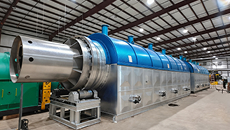
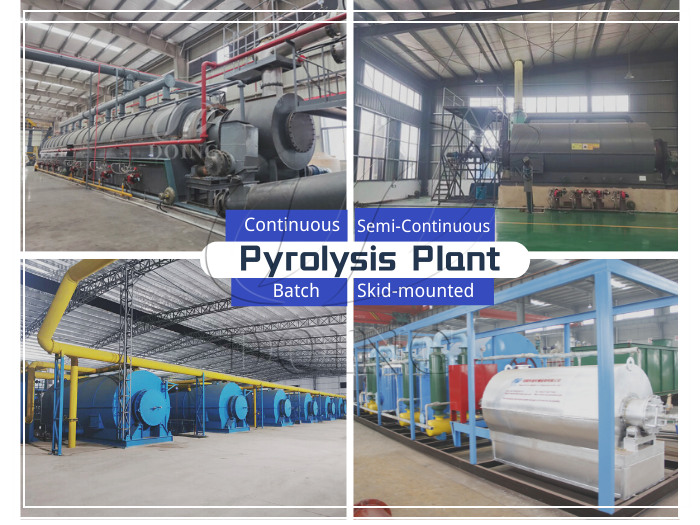 Different types of pyrolysis machines for customization
2. Pyrolysis Reactor Material
The pyrolysis reactor is the core component of the equipment; its material composition directly impacts the pyrolysis plant's safety, service life, and corrosion resistance. The DOING Group allows you to customize the reactor material based on the specific type of waste being processed:
Standard Material (Q245R or Q345R Boiler Plate Steel): This is our robust standard, suitable for processing common waste materials like waste tires, waste rubber, and most types of mixed plastics in a pyrolysis plant.
Full Stainless Steel (304, 316, 309S, 310S): For highly corrosive raw materials—such as oil sludge or coal tar residue—selecting a full stainless steel construction for your pyrolysis reactor is critical. A full stainless steel reactor ensures the long-term durability, optimal performance, and safety of the pyrolysis equipment.
And there are different thickness of waste pyrolysis reactors to choose from, such as 14mm, 16mm, 18mm, etc.
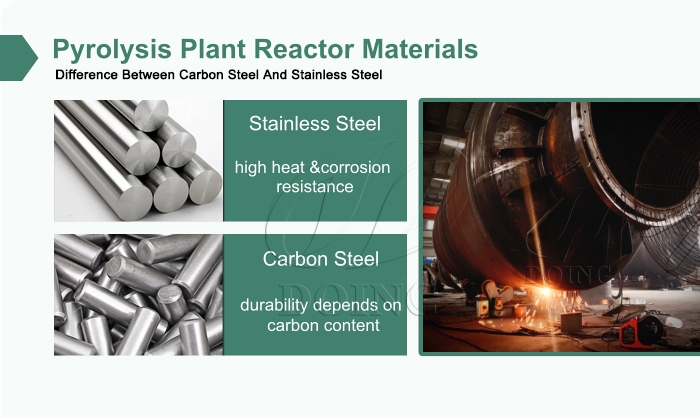 Different steel materials for pyrolysis reactor fabrication
3. Environmental Protection Devices for Pyrolysis Plants
Different countries and regions enforce strict and varied regulations regarding emission standards for pyrolysis plants. The DOING Group can customize a complete dust removal and desulfurization system for you, helping you effortlessly meet local environmental compliance requirements. Whether you need to meet European Union (EU) emission standards, U.S. EPA requirements, or local regulations in Asia or Africa, DOING's engineers can design a comprehensive pollution control system tailored to your pyrolysis plant, ensuring that your facility achieves eco-friendly production and full regulatory compliance.
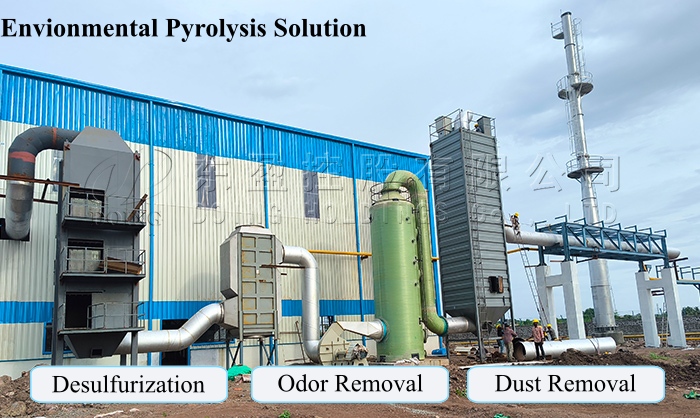 Environmental devices of DOING pyrolysis plant project
4. Automation Level of Your Pyrolysis Equipment
The level of automation in DOING's pyrolysis equipment is fully customizable, offering a range of options from semi-automated to fully automated (PLC-controlled) systems. Opting for a fully automated configuration offers distinct advantages—particularly for continuous production lines with capacities of 30 or 50 tons—as labor cost savings, enhanced operational safety, and increased efficiency are often the primary considerations in such large-scale pyrolysis plant projects.
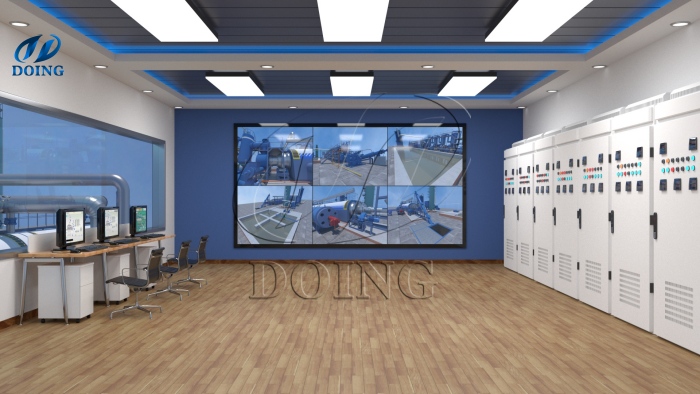 PLC system of pyrolysis production line
5. Auxiliary and Specialized Components for Pyrolysis Plants
To further enhance the performance, safety, and operational ease of your pyrolysis plant, DOING Group offers a range of auxiliary equipment for pyrolysis production line and specialized components that can be integrated into your custom design:
Tire Shredders/Cutters, Tire Steel Wire Drawing Machine: For waste tires, to ensure optimal feeding and reaction efficiency in the pyrolysis reactor.
Plastic Crushers: For various types of waste plastics, to achieve the ideal particle size for processing.
Oil Sludge dewatering system: to reduce water content in waste oil sludge, drilling sludge, etc.
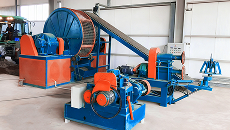
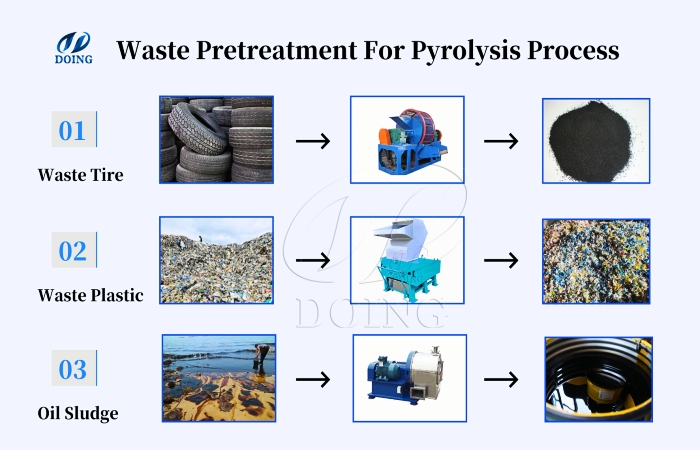 Waste treatment machines for tire plastic oil sludge pyrolysis process
Feeding Systems: Depending on your pyrolysis plant type and raw material, we can customize feeding solutions:
Automatic Screw Feeders/Belt Conveyors: For continuous and large-scale pyrolysis equipment, ensuring steady and safe material input.
Feeding Machines: Designed to work seamlessly with batch pyrolysis plants for efficient material loading.
Specialized Anti-Caking/Anti-Sticking Devices: For challenging raw materials that are prone to melting or sticking, these specialized components are crucial for smooth operation and preventing downtime:
Anti-Waxing Systems: Specifically designed to prevent plastic from melting and solidifying into a wax-like substance that can hinder the pyrolysis process and block discharge.
Anti-Oil Sludge Sticking Devices: For raw materials like oil sludge, these internal mechanisms ensure the material does not adhere to the pyrolysis reactor walls, guaranteeing efficient heat transfer and continuous operation.
Custom Design Features: We can also incorporate other specific requirements, such as specialized condensing systems for unique product outcomes, pyrolysis reactor heating device, enhanced safety interlocks, or customized structural designs to fit specific site layouts for your pyrolysis plant.
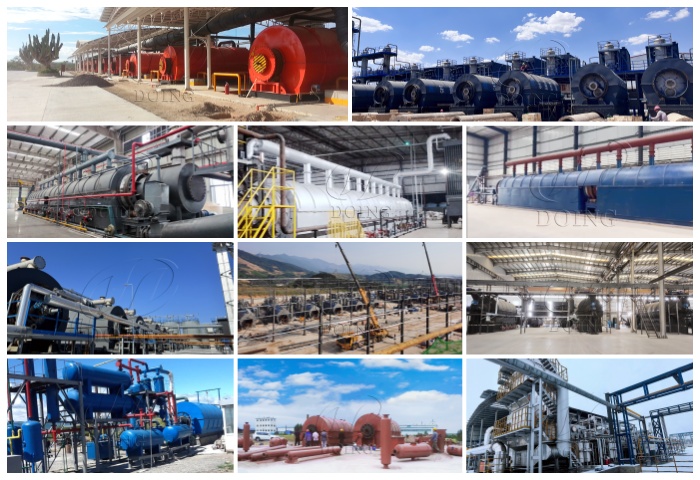 Different customization solutions of DOING pyrolysis plant projects
From processing capacity (ranging from 100 kg to 50 tons per day) and pyrolysis reactor material (from carbon steel to full stainless steel) to environmental control system configurations, automation levels, and crucial auxiliary components, virtually every core element of DOING's pyrolysis machines can be customized to meet your specific requirements.
If you have specific needs regarding waste types, local emission standards, or production targets for your pyrolysis plant, please contact DOING Group directly. Our expert engineering team will assist you in designing a pyrolysis solution engineered to maximize oil yield, strictly adhere to environmental regulations, and deliver long-term returns on your investment. Choose DOING Group for your customized pyrolysis production line today!


Contact DOING experts and learn how we can service your needs.