

News
News




Can waste plastic be directly turned into diesel fuel? For many in the recycling and energy industries, this seems like a shortcut to solving two problems at once—plastic pollution and fuel demand.
The answer, however, depends on how you define "direct." While no process turns a plastic bottle into diesel in a single second, Henan DOING Holdings offers mature, commercially proven solutions that make this conversion practical and efficient. Depending on your production goals, budget, and scale, DOING provides two distinct routes to turn waste plastic into usable diesel fuel.
When people ask about "direct" recycling, they usually mean a process that avoids multiple complex steps or high operating costs. In reality, converting plastics into diesel requires chemical changes—plastics are polymers, and diesel is a mixture of hydrocarbons. A thermal or catalytic process is needed to break down the long polymer chains. Through appropriate equipment, waste plastic can be converted into diesel in a relatively direct manner.
DOING offers two main technical routes:
Route 1: An integrated machine that performs pyrolysis, distillation, catalysis and separation in one unit.
Route 2: A two-step process using a pyrolysis plant followed by a distillation plant for higher oil quality.
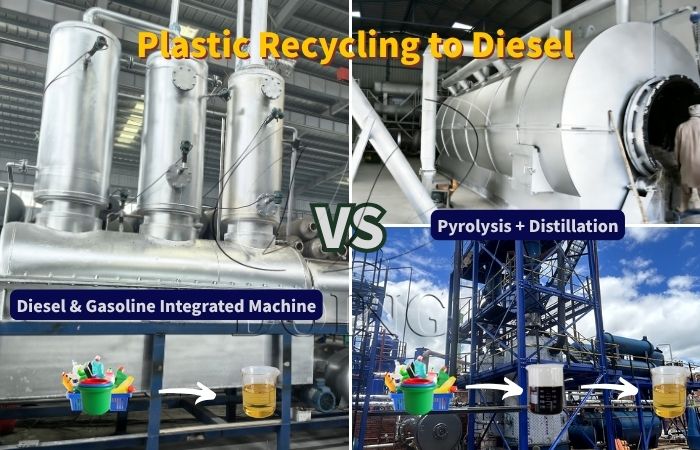
DOING two waste plastic recycling to diesel routes
For customers looking for a compact, automated, and relatively direct solution, DOING developed the Diesel and Gasoline Integrated Machine.
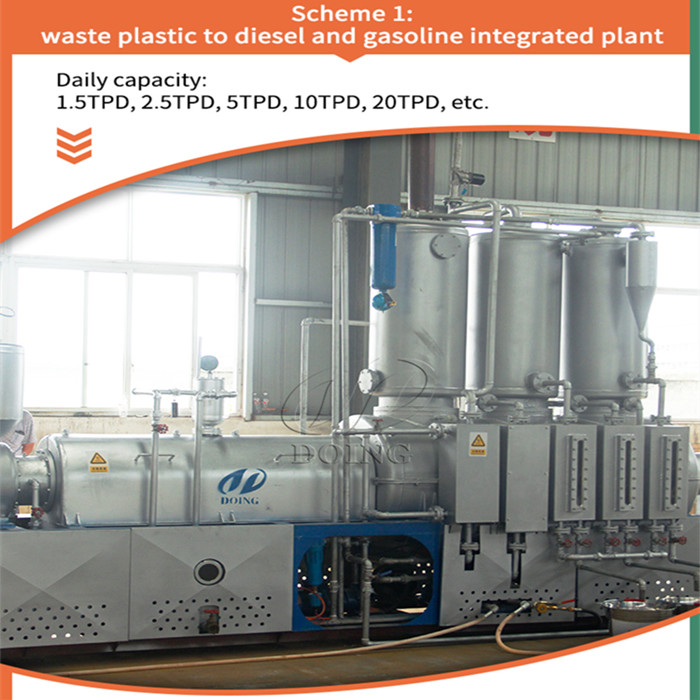
DOING waste plastic to diesel and gasoline integrated machine
How it works
This machine combines pyrolysis, distillation, and catalytic cracking in a single system. Waste plastics are fed into the reactor. Through controlled heating and catalytic reactions, the machine directly extracts light oil and separates it into three fractions: heavy oil, diesel, and gasoline.
What "direct" means here
In this setup, "direct" means the waste plastic enters one side of the equipment, and finished diesel and gasoline come out the other. The entire conversion happens within the same production line, reducing the need for separate machinery and transfers.
Key advantages
Space-saving: The integrated design reduces floor area requirements compared to separate units, significantly reduces the required floor area, leading to lower installation costs and more efficient use of valuable space.
Automated operation: A PLC control system manages the process, the machine ensures fully automatic and precise control over the entire operation. This minimizes human intervention, enhances operational efficiency, and improves safety.
Continuous feeding: The machine supports continuous operation, increasing daily throughput and overall productivity, making it suitable for medium to large-scale recycling facilities.
Environmental compliance: The machine can be configured with appropriate environmental protection systems and emission control solutions to meet local environmental standards.
Higher product value: By producing both diesel and gasoline in a single process, this solution offers diversified revenue streams and enhances the market competitiveness of the generated fuels.
This route is ideal for investors who want a complete, turn-key system with minimal onsite complexity.
For customers who need more control over oil quality or seeking a staged investment approach, the two-step approach offers flexibility.
Step 1: Waste Plastic Pyrolysis Plant – Producing Raw Oil
The first step uses DOING’s waste plastic pyrolysis plant. Under low-temperature pyrolysis conditions, waste plastics are converted into plastic pyrolysis oil, also called "plastic oil" or "heavy fuel oil."
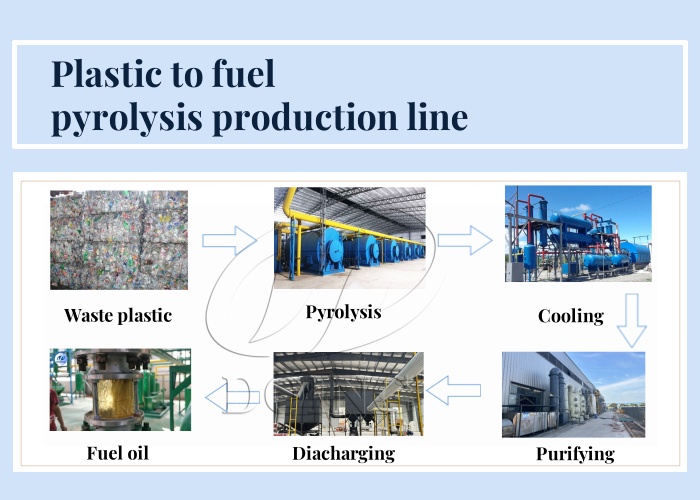
Waste plastic recycling to raw oil pyrolysis plant
Characteristics of raw oil:
Dark in color
Contains impurities, waxes, and heavier fractions
Not suitable for direct use in vehicles or precision diesel engines
This raw plastic oil can serve as an effective industrial fuel oil for applications such as boilers, furnaces, or kilns. More importantly, it acts as the primary feedstock for the subsequent refining process.
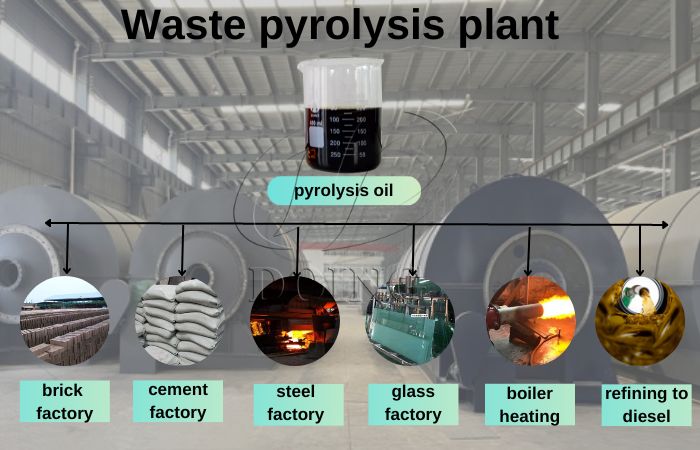
Applications of plastic pyrolysis oil
Step 2: Waste Oil Distillation Plant – Refining into Non-Standard Diesel
To upgrade the quality, the raw plastic oil is fed into DOING’s waste oil distillation plant. This unit uses distillation, decolorization, and deodorization processes to remove impurities and improve fuel properties.
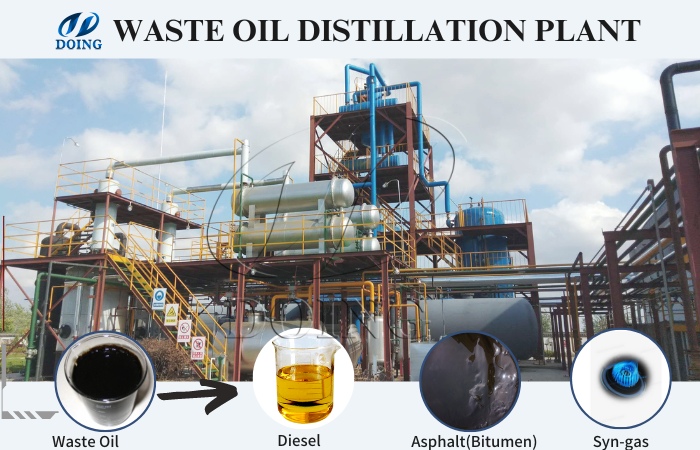
DOING plastic pyrolysis oil distillation plant
Final product:
Color: Clearer, lighter (yellowish to near-clear)
Calorific value: Higher than raw plastic oil
Quality: While it may not meet the stringent specifications for automotive-grade diesel, its improved properties make it significantly more versatile than the raw pyrolysis oil. This non-standard diesel is ideal for industrial applications such as fuel for boilers, heavy machinery, marine engines, power generators, and certain types of industrial furnaces.
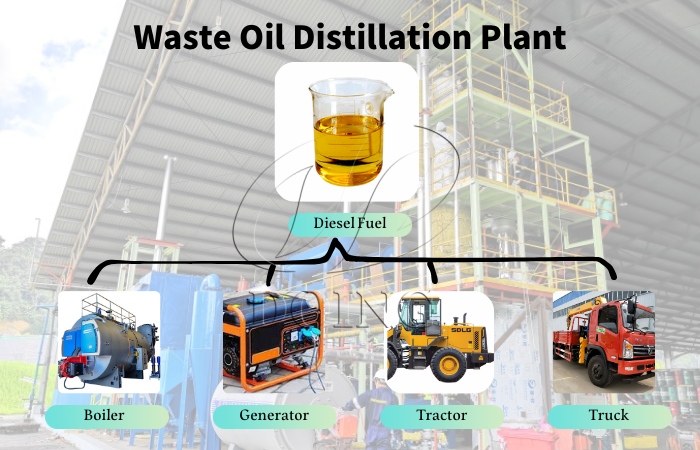
Applications of diesel refined from plastic pyrolysis oil
Advantages of this two-step approach:
Lower initial investment: You can start with the pyrolysis plant and add the distillation unit later.
Product flexibility: Sell raw plastic oil, or refine it for higher value.
Quality control: More control over the final oil specifications.
There is no single "best" solution for all customers. The right choice depends on several factors:
Type and volume of plastic waste you have available
Desired output quality (industrial fuel vs. non-standard diesel vs. diesel/gasoline)
Budget and space for equipment
Local environmental regulations
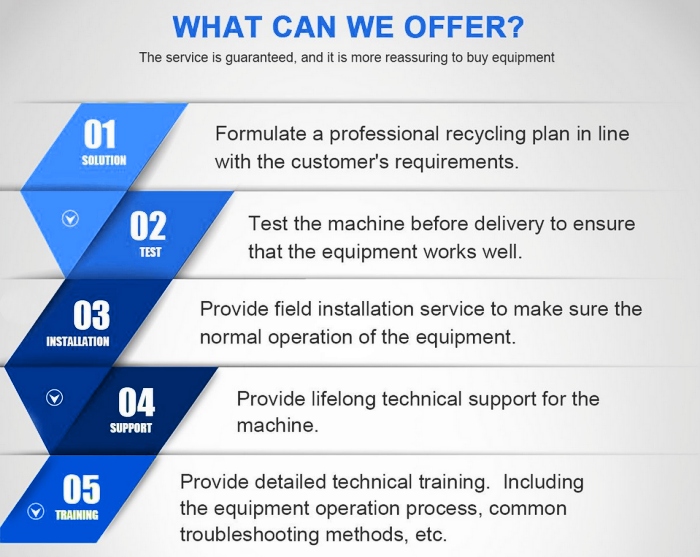
DOING waste plastic recycling to diesel machine manufacturer services
DOING provides more than just machines. The company’s engineering team offers project planning, equipment selection, installation guidance, and after-sales support.
If you are evaluating a waste plastic to fuel project, contact DOING Company to discuss your specific needs. The team can provide equipment configurations and project plans tailored to your raw materials, capacity, and end-product goals.


Contact DOING experts and learn how we can service your needs.